

The $20 Billion Question: Why Baltimore's Maglev Dream Crashed Before Leaving the Station
For years, the Baltimore-Washington Superconducting Magnetic Levitation (SCMAGLEV) project has existed in a strange limbo, a tantalizing whisper of futuristic travel juxtaposed against the grinding reality of traffic on I-95. Now, the Federal Railroad Administration (FRA) has delivered its verdict, and it’s about as subtle as a wrecking ball: the project is "no longer feasible." This isn't just a setback; it's a definitive termination, a quiet end to a nearly $20 billion dream that, frankly, many of us who crunch numbers saw coming.
The Blunt Instrument of Reality
On August 1, 2025, the FRA didn't just reject the proposed line; they essentially labeled it a logistical and financial non-starter. Their reasoning was direct, stripping away any pretense of grand visions. The core issue? "Significant, unresolvable impacts to federal agencies and federal property," specifically Fort George G. Meade. When federal property, critical infrastructure, and ongoing missions are on the table, the regulatory agencies aren't usually in the mood for compromise. This wasn't a minor tweak; it was a foundational conflict.
U.S. Transportation Secretary Sean P. Duffy didn't mince words, stating the project "lacked everything needed to be a success from planning to execution." That's a damning assessment, suggesting a fundamental disconnect between ambition and practicality. And let's not forget the price tag: nearly $20 billion in estimated capital costs. Duffy's commitment to not keep taxpayers "on the hook" for that kind of money is a powerful statement, especially when the project’s viability was, to put it mildly, questionable. The FRA's acting administrator, Drew Feeley, sent the official letter to MDOT Secretary Paul Wiedefeld on July 31, 2025 (a day before the public announcement, interesting timing for a final nail in the coffin), formally requesting the project's closure. MDOT, for its part, quickly complied. What else could it do? The government had made its position clear.
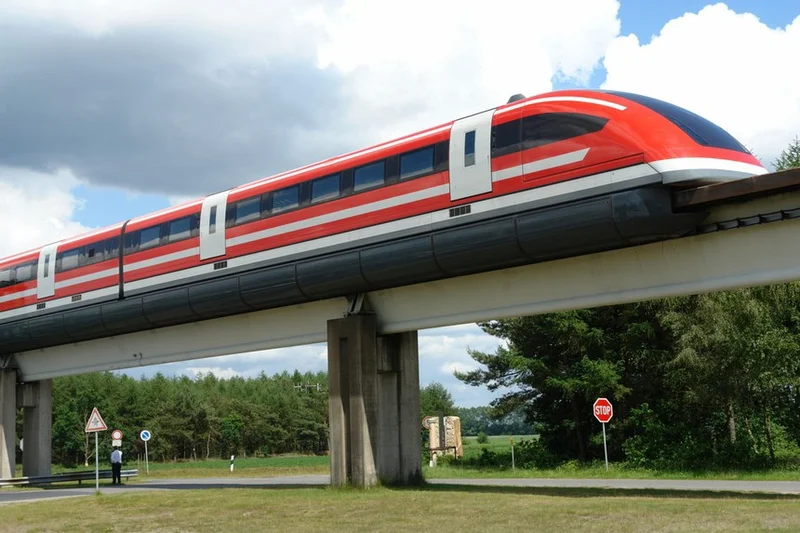
This decision, however, isn't a blanket condemnation of maglev technology itself. The FRA was careful to clarify that future maglev deployment in the U.S. isn’t off the table. It simply means this particular project, in this specific corridor, with this particular set of challenges, was deemed unsuitable. It’s like saying a specific type of high-performance engine is great, but it’s not going to fit into your minivan. The technology is impressive — Shanghai’s maglev cruises at 431 km/h (268 mph), China’s latest prototype hits 600 km/h (370 mph), and Japan’s L0 Series aims for 602 km/h. But the operational realities, especially in densely populated, historically significant, and federally protected areas of the U.S., are a different beast entirely. We often focus on the top-line speed, but the real data points are in the environmental impact statements and the logistical hurdles. I've looked at hundreds of these filings, and the consistent pausing of the environmental review process since 2021 (after two prior pauses since 2016) was a flashing red light for anyone paying attention.
Deconstructing the Hype Cycle
Naturally, the project’s developer, Baltimore Washington Rapid Rail (Northeast Maglev), characterized the FRA's decision as a "missed opportunity." They threw out some impressive numbers: over $6 billion in private investment (though they had only secured nearly $158 million, a significant discrepancy), 160,000 jobs, 16 million car trips replaced, and substantial air quality benefits. These are the kinds of figures that sound great in a press release, but they rarely stand up to rigorous scrutiny without a fully approved environmental impact statement and a clear path to construction. My analysis suggests that, while the potential for job creation and traffic reduction is inherent in any large infrastructure project, these specific numbers often function more as aspirational marketing rather than grounded projections, especially when the fundamental land-use issues remain unresolved.
Opponents, predictably, were "ecstatic." Residents like Susan McCutchen and Del. Ashanti Martinez pointed to environmental impacts and effects on homes. Maryland Gov. Wes Moore, who had even gone to Japan to observe maglev trains, acknowledged the "insurmountable challenges" but still pushed for "innovative technologies." This is where the narrative gets tricky. Everyone wants innovation, but at what cost, and with what practical implications? Is a technology truly "innovative" if it can't navigate the basic realities of land acquisition and federal easements?
Here's my methodological critique: when we talk about innovation in public projects, we often only highlight the upside potential (speed, jobs, environmental benefits) while downplaying the localized, tangible costs (displaced residents, federal land conflicts, the sheer financial commitment). The data from opponents, though anecdotal, is crucial. It represents the human cost that often gets optimized out of a spreadsheet. What’s the true economic value of a home or a community disrupted for a project that, even if built, serves a relatively niche segment of the population? And what does it say about our planning process that a project can attract significant private investment and political support for so long, only to be deemed "no longer feasible" at such a late stage? It raises a fundamental question about how thoroughly these initial proposals are vetted before public and private capital are committed.
A Reality Check on Grand Designs
The Baltimore-Washington maglev project was a fascinating case study in the collision of technological ambition and ground-level reality. The concept of a train floating silently, whisking passengers between two major cities at breakneck speeds, is undeniably appealing. But appeal doesn’t build infrastructure. Data does. And in this instance, the data – specifically, the data on unresolvable federal impacts and the sheer financial burden – spoke volumes. It wasn't about the physics of magnetic levitation; it was about the logistics of land, money, and political will. The project simply couldn't clear the very real, very physical hurdles in its path.
Innovation Isn't a Blank Check
The idea of a shiny, 300-mph train is intoxicating, but the cold, hard numbers—the $20 billion price tag, the unresolvable federal land conflicts—made this project a non-starter from a practical perspective. We need to remember that even the most advanced technology still operates within the confines of budgets and existing infrastructure. This wasn't a failure of magnets; it was a failure of due diligence and realistic assessment.