

The market, bless its excitable heart, got itself into a tizzy this week. Shares of Alphabet (GOOGL) jumped a tidy 2.6% in after-hours trading, holding steady into Tuesday. Meanwhile, its semiconductor rivals, Nvidia (NVDA) and Advanced Micro Devices (AMD), took a hit, with NVDA stock dipping 1.5% after hours and sliding further (3% to 3.6%) in premarket. AMD stock wasn't far behind, shedding 1.7%. This immediate, almost visceral reaction, which saw Google Stock Jumps, Nvidia and AMD Fall amid TPU Expansion to Meta - TipRanks, was triggered by a report from The Information suggesting that Meta Platforms (META) is weighing the use of Google’s custom Tensor Processing Units (TPUs) in its data centers by 2027, with potential cloud rentals as early as next year.
This isn't just a friendly chat over coffee; Google is reportedly discussing a multibillion-dollar deal with Meta, a company projected to spend between $70 billion and $72 billion on capital expenditures this year, much of it on AI infrastructure. It's a strategic chess move in the high-stakes game of artificial intelligence. Google, with its internally developed TPUs since 2018, aims to offer a compelling alternative to the ubiquitous GPUs that have made Nvidia the undisputed king of AI hardware. While Nvidia's dominance isn't likely to evaporate overnight, the sheer scale of Meta's potential investment, and its clear desire to diversify its chip supplies away from a single provider, sends a clear signal. This isn't just about saving a buck; it's about strategic resilience, and Google is positioning itself as the viable second option.
The Alphabet Ascendant (Or So It Seems)
Let's not forget, Alphabet (GOOGL) isn't exactly struggling. The company just posted a robust quarter, blowing past analyst estimates with $2.87 Earnings Per Share (EPS) against a projected $2.29, and revenue hitting $102.35 billion, comfortably exceeding the $99.90 billion forecast. This isn't just a slight beat; it's a significant outperformance, indicating that Google's core businesses—from Search and YouTube to its burgeoning Cloud segment—are firing on all cylinders. The financial metrics are undeniably strong: a net margin around 32.23%, a return on equity of 36.08%, and a market capitalization that dwarfs many nations at $3.81 trillion.
Unsurprisingly, the analyst community has been tripping over itself to raise price targets. Arete bumped Alphabet's price target to $300 from $220. Goldman Sachs went to $330 (from $288). BNP Paribas Exane set a lofty $355. KeyCorp, Sanford C. Bernstein, and Barclays also joined the parade, all lifting their targets significantly. The consensus average target price for GOOGL stock now sits around $306.70, with a resounding "Moderate Buy" rating. Forty analysts issued a "Buy," and four even went for a "Strong Buy." It's a chorus of bullishness, a veritable ticker-tape parade for Google stock.
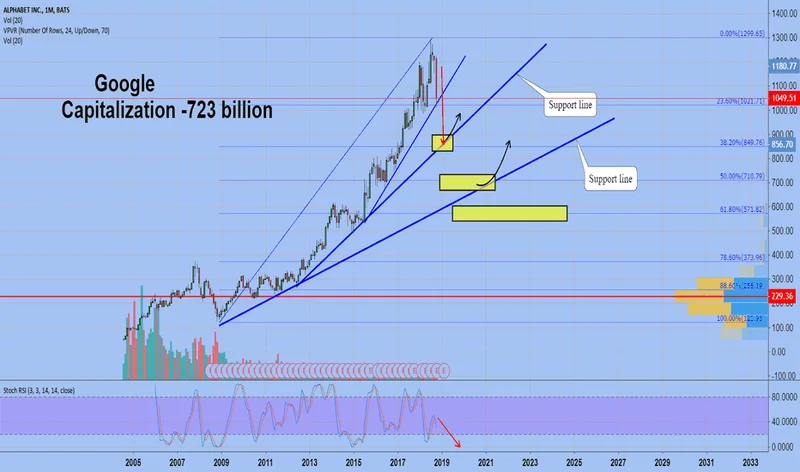
But here's where my analytical antennae start twitching. I've always found it fascinating how quickly narratives can shift, often before the ink is even dry on a deal that's still "under consideration." The market's reaction, the analyst upgrades—they're all based on potential, on discussions. How much of this market movement is based on concrete deal terms, and how much is just speculative froth? It's like everyone's cheering for a football team that just might sign a superstar player, before the contract is even drafted. And this is the part of the report that I find genuinely puzzling, because while the outside world is hailing Alphabet's ascent, a different story is playing out internally.
The Whisper of Doubt in the Data Stream
Despite the overwhelming external optimism, the data reveals a quiet, yet significant, counter-narrative. In the last quarter, corporate insiders at Alphabet sold a total of 225,174 shares, valued at approximately $58.1 million. We're talking about individuals like John Kent Walker, who offloaded 17,816 shares for $4.4 million on September 29th, and CAO Amie Thuener O'toole, who sold 2,778 shares for $0.69 million on October 15th.
Now, I've been tracking insider activity for years, and this kind of divergence between public sentiment and private action is a data point you just can't ignore. When the market is high-fiving a stock, and analysts are drawing upward-sloping arrows on their charts, you'd expect insiders—the people with the most intimate knowledge of the company's prospects—to be holding tight, maybe even buying. Instead, we see a substantial divestment. This isn't just pocket change; it's a significant chunk of change. Why are the people who literally run the company choosing to cash out during a period of such pronounced bullishness?
It forces us to ask a critical question: Is the market overestimating the immediate impact or certainty of this Meta deal? Or perhaps, are insiders seeing something in the broader economic landscape, or even within Alphabet's long-term competitive position against players like Nvidia, that isn't immediately apparent to the public? The positive analyst sentiment is undeniable, but the insider selling provides a stark, quantitative counterpoint that demands scrutiny. It's a classic case of "do as I say, not as I do," but in the world of stock trades, "doing" speaks louder than any analyst report.
The Elephant in the Room
The market's reaction to the Meta-Google TPU news is a textbook example of how quickly speculation can move prices. While the potential for Google's TPUs to chip away at Nvidia's formidable lead in AI semiconductors is real, and Meta's desire for diversification is understandable, the sheer volume of insider selling at Alphabet (GOOGL) creates a palpable tension. It's a data point that screams for a deeper look beyond the headlines and analyst upgrades. Are we witnessing the start of a genuine shift in AI infrastructure, or just another speculative bubble inflated by a juicy rumor? Only time, and more concrete data, will tell.