

The SpaceX Double-Tap: A Data Dive into "Aircraft-Like" Operations
Let's talk about efficiency, or more accurately, the perception of it. On November 14th and 15th, SpaceX pulled off a feat that, on its face, screams operational prowess: two Falcon 9 launches from Cape Canaveral SpaceX completes second fastest turnaround between Falcon 9 launches from Cape Canaveral - Spaceflight Now. The Starlink 6-89 mission departed from Pad 39A at 10:08 p.m. EST, followed by Starlink 6-85 from Pad 40 at 1:44 a.m. EST. Both delivered 29 Starlink V2 Mini satellites, pushing SpaceX's total orbital count closer to the 9,000 mark. Impressive, yes. But the real story, as always, lies in the underlying metrics and the rhetoric that frames them.
SpaceX Vice President Kiko Dontchev hailed it as evidence of the "Worlds busiest spaceport!" and a stride towards "aircraft like operations." Space Force officials, including Col. Brian Chatman, echoed the sentiment, praising the "dedication and expertise" of the teams. And Space Florida declared "Another record-breaking year." This isn't just about rockets launching; it's about the narrative of relentless progress and unparalleled speed. My analysis, however, suggests we need to look closer at what "aircraft-like" truly implies when the context shifts from air travel to orbital mechanics and the intricate ballet of ground support.
Consider the raw numbers: the booster for Starlink 6-85 (B1078) completed its 24th flight, a staggering figure that underscores the value of reusability. Its counterpart for Starlink 6-89 marked its 8th flight. These are not insignificant achievements. They represent a significant return on investment in hardware that, not so long ago, was discarded after a single use. The financial implications alone are transformative, fundamentally altering the unit economics of space launch. But while the rockets themselves are demonstrating unprecedented resilience, the operational tempo on the ground introduces a different set of variables.
The Real Cost of Velocity: Beyond the Rocket
The public narrative often focuses on the rockets—their power, their reusability, their almost balletic landings. And rightly so; it's a spectacle. But the true operational bottleneck, the component that doesn't scale as easily as a production line for boosters, is the human element and the ground infrastructure. Space Launch Delta 45 has been making "investments in infrastructure modernization, streamlined processes, and strengthened partnerships." All good on paper. Yet, they also highlight the persistent challenge of ensuring sufficient personnel—electrical engineers, communication technicians, payload integration specialists—to support this ever-increasing launch tempo. This isn't just an observation; it's a methodological critique of how we measure "readiness." A rocket might be ready, but is the system?
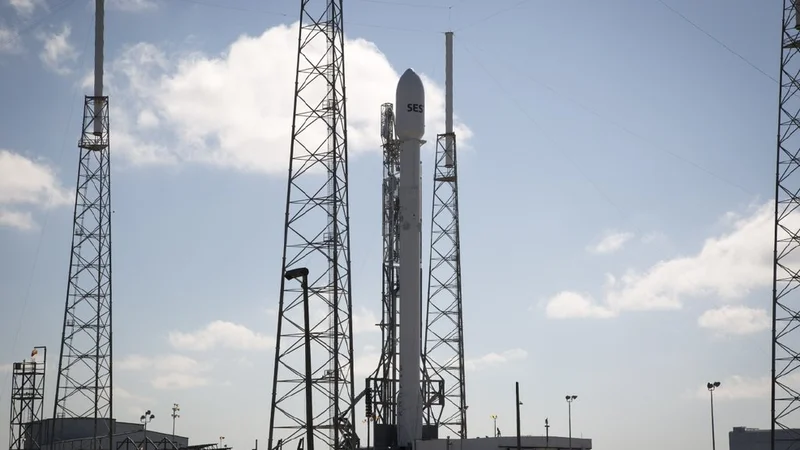
This is where the "aircraft-like operations" analogy starts to fray. An aircraft turnaround involves a highly standardized, predictable sequence of refueling, passenger boarding, and routine checks. The environment is controlled, and the variables are largely confined to weather and minor mechanical issues. A space launch, even a routine Starlink mission, is a different beast entirely. We saw other high-profile liftoffs around the same time: Blue Origin's New Glenn (a first-stage landing, a significant milestone) and ULA's Atlas V. But we also saw scrubs: NASA's ESCAPADE due to solar activity, Blue Origin's ESCAPADE again due to weather, and a ULA Atlas V scrub due to a liquid oxygen vent valve. These aren't minor delays; they're complex, multi-factor postponements that underscore the inherent fragility and intricate interdependencies of space operations.
I've looked at hundreds of these operational reports, and what's often overlooked is the sheer, grinding effort behind the scenes. Think of it like a Formula 1 pit crew, but instead of changing four tires in two seconds, they're reconfiguring entire launch complexes, integrating payloads, and running exhaustive safety checks, all while managing an ever-present element of risk. And they're doing it in shifts, under immense pressure, often in the dead of night. Are we accurately accounting for the human capital burn rate in this pursuit of maximum launch cadence? Is a "busiest spaceport" necessarily the most efficient in the long run, or simply the one pushing its resources to the absolute limit? This is where the simple "brilliant" comments from online forums, while reflecting genuine excitement, miss the deeper logistical implications.
The Numbers Don't Tell the Whole Story
SpaceX is targeting yet another launch on November 18th, the 99th of the year for Florida's Space Coast, pushing relentlessly towards that century mark. This relentless drive is what Andy Lapsa of Stoke Space noted, comparing the current acceptance of first-stage recovery to the future acceptance of second-stage reuse. He’s probably right. The industry is adapting, evolving. But what are the hidden costs of this adaptation?
We celebrate the 3-hour, 35-minute turnaround, and we should acknowledge the engineering marvel. But what about the 35 hours of preparation before that, or the 350 hours of maintenance after? These numbers are less visible, less dramatic. They don't make for great headlines. But they are the true bedrock of "aircraft-like operations." Without a transparent view of the full operational cycle and the true cost of maintaining this tempo—including the human cost—we're only seeing half the picture. The question isn't just how fast you can launch, but how sustainably and efficiently you should.
The Relentless Grind: Is Speed the Only Metric?
SpaceX’s dual launch was a powerful demonstration of capability, undeniable. But to call it "aircraft-like" is to perhaps misunderstand the inherent complexities and risks of spaceflight compared to commercial aviation. It's more akin to a high-frequency trading firm, where the speed of execution is paramount, but the underlying infrastructure—the servers, the network, the human analysts monitoring for anomalies—is constantly pushed to its limits, demanding continuous, resource-intensive maintenance and upgrades. We are witnessing an incredible increase in volume, but the data suggests that the true efficiency story, particularly regarding human and ground infrastructure, is far more nuanced than simple turnaround times suggest. The real question isn't just how many rockets go up, but what it takes to keep the entire system from buckling under the pressure.