

How a Government Shutdown Accidentally Revealed the Future of Air Travel
It’s a story we’ve all grown tired of hearing. Gridlock in Washington, a government shutdown, and the immediate, cascading failure of critical public services. This time, the axe fell on the Federal Aviation Administration, forcing a blunt 10% reduction in flights at 40 of our nation’s biggest airports. The headlines write themselves: chaos, cancellations, and a travel nightmare looming right before Thanksgiving. It’s the perfect portrait of a brittle, centralized system cracking under pressure.
But what if that’s not the whole story? What if, hidden within this narrative of dysfunction, there’s a flicker of a much more hopeful, much more intelligent future?
I’ve been watching the situation in Central Florida, not at the sprawling mega-hubs of Orlando (MCO) or Tampa (TPA), but at a smaller, nimbler airport called Lakeland Linder (LAL). And what’s happening there isn't just a temporary workaround; it’s a stunning, real-world demonstration of a principle I’ve been talking about for years: the profound power of resilient, decentralized networks. This isn’t just about a few diverted flights. This is a glimpse of a paradigm shift.
The Antifragile Airport
When the FAA mandate came down, the giants of the industry—the Orlandos and Tampas—had no choice but to contract. They are the massive mainframes of the aviation world: powerful, yes, but monolithic and slow to adapt. A single point of failure in their federal funding mechanism sends shockwaves through the entire system.
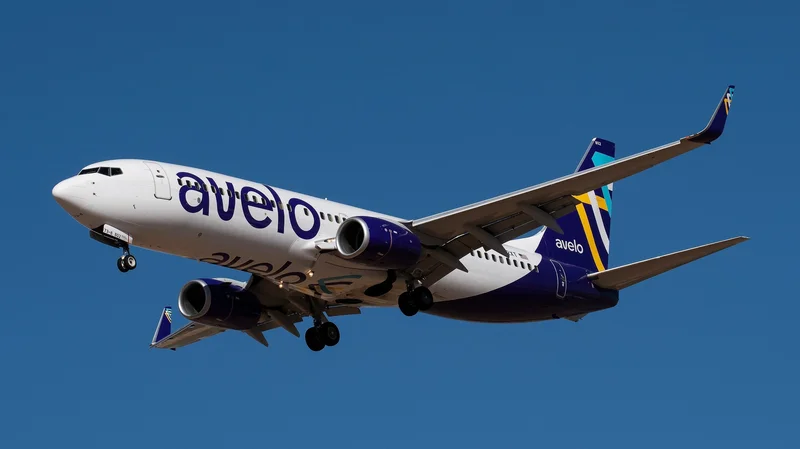
But then there’s Lakeland. It’s a smaller airport, a regional node in the network. Its primary carrier, Avelo Airlines, is now in direct talks with the airport’s leadership, actively exploring how to absorb the shock—a possibility that has local media asking, Could FAA cuts to Orlando, Tampa airports result in more Avelo flights to Lakeland Linder? Airport Director Kris Hallstrand put it beautifully: "We are working to make ourselves available as an alternative airport at this time." This isn't just a backup plan; it's a dynamic response.
And here’s the most fascinating part, the technical detail that unlocks the whole concept. Lakeland Linder’s air traffic control tower isn’t staffed by federal employees. It’s run by a private contractor, RVA Robinson Aviation. This means while their federal counterparts are working without pay, the controllers at Lakeland are on the job, fully funded, and ready to go—the system is designed with a layer of redundancy that insulates it from the political chaos in D.C. This is a perfect example of an antifragile system, which is a concept from systems theory—in simpler terms, it means a system that doesn't just resist shocks, but actually gets stronger from them.
Think of it like the internet itself. It wasn't designed with one central hub. It was designed as a distributed network so that if one node went down, traffic could simply reroute. It was built for resilience. What we're seeing in Lakeland is the physical manifestation of that same brilliant idea. The shutdown isn't just a problem for Avelo to solve; it's an opportunity for them to demonstrate their agility, potentially routing more traffic through a node that is proving to be more robust than its larger neighbors. Is this just a temporary patch, or are we witnessing the market discovering, in real-time, a more intelligent way to build our national infrastructure?
The Human Circuit Breakers
Of course, technology and systems are only one part of the equation. When I first read about the situation with the TSA officers at Lakeland, I honestly just had to sit back from my screen for a moment. These security personnel, who are technically based out of Tampa, are federal employees. They haven't been paid since the shutdown began on October 1. And yet, there they are, on the front lines, keeping a smile on their faces because, as Hallstrand says, "They don’t want the passengers' safety to suffer."
This is the kind of breakthrough that reminds me why I got into this field in the first place—because at the heart of every great system are human beings. These officers are acting as human circuit breakers, absorbing the immense pressure of a failing system to ensure the safety and sanity of everyone else. It’s both incredibly inspiring and a stark reminder of our responsibility to build systems that don’t demand this kind of sacrifice. We can, and must, do better.
The uncertainty of the coming weeks, especially with Thanksgiving on the horizon, feels like a massive stress test for the entire country. The old model—the one dependent on a handful of massive, easily disrupted hubs—is showing its cracks. The question you and I should be asking is not "How bad will the delays be?" but rather "What can we learn from this?"
What if the future of air travel isn’t just about bigger planes and more sprawling terminals? What if it’s about a smarter, more distributed network of airports like Lakeland, each one a resilient, responsive node? Imagine a future where disruptions are seamlessly rerouted, where agility trumps sheer size, and where the system is designed from the ground up to be as dedicated and resilient as the people who currently hold it together.
This Is What a System Reboot Looks Like
Let's be clear. A government shutdown is a failure, full stop. But looking at the response from places like Lakeland Linder gives me incredible hope. This isn’t a story about decline; it’s a story about adaptation. It’s the rigid, centralized model being stress-tested to its breaking point, while a more flexible, networked model proves its worth on the fly. We are watching a live-fire drill for the future of infrastructure, and the lesson is clear: the future isn’t bigger, it’s smarter. The resilience we need won't come from Washington; it will be built, node by node, in innovative communities that are ready for tomorrow.