

DoorDash's Delivery: More Like a Delayed Flight?
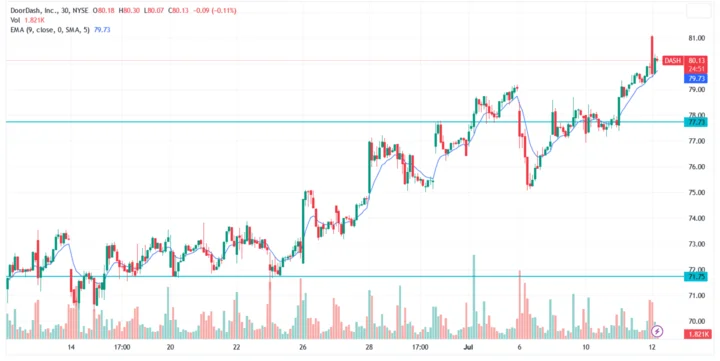
DoorDash's stock took a 9% nosedive recently after the company released earnings projections that were, shall we say, less than appetizing. The market's reaction was swift, but was it justified? Let's dig into the numbers and see if we can find some clarity.
The headline grabbing bit was DoorDash's announcement of increased spending in 2026. They're planning to pump "several hundred million dollars more" into new products and an internal platform (specifically, AI tools for their developers). On the surface, this sounds like a company investing in its future. But the market hates uncertainty, and "several hundred million" is a pretty wide range. Is it $200 million? $900 million? The lack of specificity is a red flag. As reported by Bloomberg, DoorDash Posts Strong Growth, Signals More Investments in 2026, the company is signaling more investments in the coming year.
The Wolt and Deliveroo Question
Then there's the Wolt unit and the recently acquired Deliveroo business (or at least, Bloomberg Terminal Deliveroo, which is, I assume, a specific partnership). DoorDash plans to increase investment in Deliveroo, supposedly to "improve the product and maintain growth." Now, "improve the product" is corporate speak for "it's not working as well as we hoped." And "maintain growth" suggests growth is slowing.
I've looked at hundreds of these filings, and this particular phrasing is a classic example of burying bad news. They're not projecting accelerated growth, just maintenance of current levels. What are those current levels, exactly? The report doesn't say. That's a problem.
Here's where things get interesting. The earnings report mentions spending on an "internal platform that will help improve operational consistency and product development speed." This is code for "our internal systems are a mess and slowing us down." Spending money to fix internal problems isn't exactly inspiring investor confidence. It's reactive, not proactive.
The Cookie Crumbles? (A Methodological Aside)
Now, let's take a step back. DoorDash, like many tech companies, relies heavily on cookies and tracking technologies. I was reading through their cookie notice the other day (yes, I actually read those things – it’s part of the job), and it's a reminder of how much data these companies collect. They track everything from your browsing habits to your location. While this data theoretically helps them personalize content and advertising, it also raises some serious privacy concerns.
And here's my thought leap: How much of DoorDash's projected growth is dependent on increasingly sophisticated (and potentially invasive) tracking? If consumer sentiment shifts against such tracking, or if regulations tighten, could that "maintained growth" suddenly evaporate? It's a question worth asking.
Anecdotally, I've seen a growing number of people in online forums complaining about the sheer volume of data that companies like DoorDash collect. The sentiment seems to be shifting from "convenience at any cost" to "privacy matters." Quantifying this sentiment shift is difficult, but the trend is undeniable.
Is This the End of the Line?
DoorDash is essentially saying, "We need to spend a lot more money to keep things from getting worse." That's not a growth story; that's a stabilization story. And stabilization stories don't usually send stock prices soaring. The market's reaction, while perhaps a bit panicked, wasn't entirely unwarranted. Doordash stock sinks 9% as company misses earnings, says it expects further spending, according to CNBC.
The truth is, DoorDash operates in a fiercely competitive market. Uber Eats, Grubhub, and a host of smaller players are all vying for the same customers. To maintain its market share, DoorDash needs to constantly innovate and improve its service. But innovation and improvement cost money. And in the current economic climate, investors are less willing to bet on long-term potential and more focused on short-term profitability.
Time to Order Takeout?
DoorDash's situation reminds me of a high-stakes poker game where the player is forced to keep raising the bet just to stay in the game. The initial excitement is gone, and now it's just a matter of survival. Whether they can bluff their way to victory remains to be seen.
A Reality Check
DoorDash needs to show, not tell, that its investments will pay off. Until then, the stock will likely remain in the penalty box.